

Table of Contents
- What Makes a Cat Collar Durable Enough for an Active Cat
- The Failure Points: What Actually Breaks First
- Breakaway Cat Collar Safety Standards: How Much Force Should Release the Buckle
- Materials That Survive Snags, Weather, and Daily Wear
- How to Measure a Cat for a Collar (And Why Fit Affects Durability)
- Cat Collar Maintenance Tips: Cleaning, Inspection, and Replacement
- Harness Integration, Reflective Features, and ID Tag Compatibility
- Conclusion: Picking a Collar That Keeps Up With Your Cat
- Frequently Asked Questions
Last Updated: October 2, 2026
What Makes a Cat Collar Durable Enough for an Active Cat
Durable cat collars for active felines need fray-resistant webbing, a breakaway safety buckle that releases under the right pressure, and hardware that survives daily snags.
Durability and safety pull in opposite directions: a collar strong enough to never break can strangle a cat caught on a branch.
The 2026 market is full of collars that look tough but fail at the clasp or stitching within months.
The Failure Points: What Actually Breaks First
The buckle and stitching fail long before the webbing does. A collar that snaps usually does so at the quick-release clasp or where the webbing meets the D-ring, not mid-strap.
Watch for these weak spots:
- The clasp mechanism: Cheap plastic cracks at the hinge after repeated flexing.
- D-ring attachment: A single line of stitching pulls free under a hard tug.
- The adjuster slide: Loses grip and the collar loosens on its own.
- Edge fraying: Unsealed webbing ends unravel and thin out over time.
Judging durability by strap thickness is a mistake, thickness means nothing if the clasp is brittle. Squeeze the buckle and flex the D-ring before you commit.
Breakaway Cat Collar Safety Standards: How Much Force Should Release the Buckle
Breakaway cat collar safety standards describe the pull force that should release the buckle, protecting a snagged cat. The widely cited target is roughly 4 to 6 pounds of pressure, enough to free a cat without popping open during normal scratching or play.
The principle matters more than the precise figure: a breakaway buckle fails on purpose, at a force low enough to save a cat's neck but high enough to stay closed during a hard scratch.
Quick-Release Clasp vs. Traditional Buckle
A quick-release clasp opens with two fingers or a firm tug, while a traditional buckle stays locked until you undo it. For an outdoor cat, the quick-release clasp is safer because it can release on its own when caught.
Traditional buckles belong on harnesses, not neck collars, a belt-style buckle won't release under load, defeating the purpose of a safety collar.
Materials That Survive Snags, Weather, and Daily Wear
Nylon webbing survives snags, weather, and daily wear better than most alternatives, which is why it dominates the durable cat collars market: it resists fraying, dries quickly, and holds its shape.
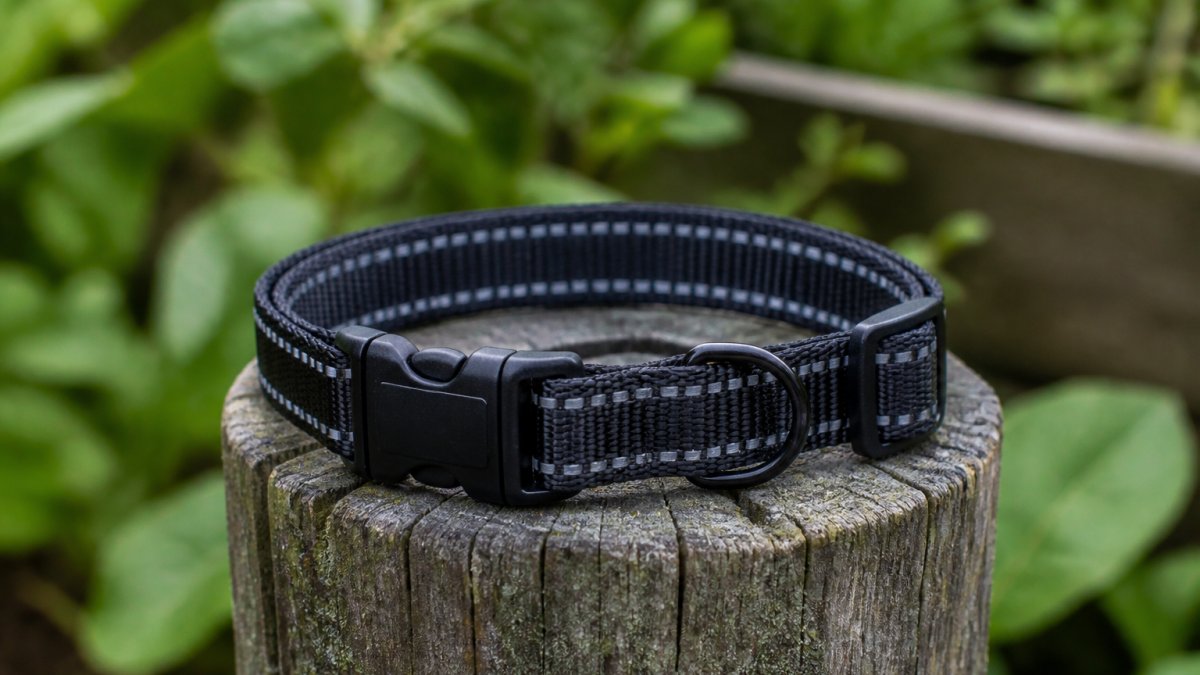
Nylon Webbing vs. Genuine Leather vs. Hypoallergenic Alternatives
- Nylon webbing: Lightweight, weather-resistant, and fray-resistant. Best for outdoor cats and daily wear.
- Genuine leather: Durable but heavy, and it needs conditioning to stay supple. Best for indoor cats and owners who want a classic look.
- Hypoallergenic options: Cotton blends or coated webbing suit cats with sensitive skin that reacts to dyes or hardware.
If your cat has shown irritation from a previous collar, try an allergy-friendly material with non-toxic dyes before assuming the fit is the problem, the material touching the neck matters as much as the buckle.
A Six-Month Wear-and-Tear Report: What Fails First
Most collar reviews stop at the unboxing, which tells you nothing about how a strap behaves after a summer of fence-climbing. Here's a realistic six-month timeline for an outdoor cat, based on the failure order most owners report:
- Months 1-2: The reflective strip and printed patterns fade first, especially on collars washed with harsh detergent. The webbing itself is unaffected.
- Months 2-4: Edge fraying begins at the cut end of the strap if the webbing wasn't heat-sealed. This is cosmetic until the fray reaches the stitching line.
- Months 3-6: The adjuster slide is the first functional part to loosen. Nylon stretches slightly with moisture cycling, so a collar that fit in spring can be a half-inch looser by fall.
- Months 4-6: Buckle fatigue shows up as a stiff hinge or a clasp that needs two presses to release. This is the point where a collar should be retired, not repaired.
The webbing typically outlives the hardware by a wide margin, which is why judging a collar by strap thickness is misleading, the plastic and stitching determine service life.
Hypoallergenic Materials for Sensitive Skin
Active cats get wet, roll in grass, and trap moisture under the collar, that damp contact time triggers most skin reactions, not the material alone. If your cat develops a bald patch, redness, or persistent scratching under the collar, the culprit is usually a nickel-plated D-ring, a reactive dye in the webbing, or trapped moisture from a collar that never fully dries.
Hypoallergenic options address these one at a time:
- Coated or PVC-free webbing: The coating blocks dye transfer to the skin.
- Stainless steel or plastic hardware: Avoids nickel, the most common metal allergen in pet gear.
- Cotton or hemp blends: Breathable and dye-free, but they absorb water and need more frequent cleaning than nylon.
No material is universally hypoallergenic. Switch one variable at a time, hardware first, then webbing, and watch for two weeks before deciding what helped.
Cleaning Protocols by Material
How you clean a collar determines how long it lasts. The wrong method strips coatings, fades reflective thread, and stiffens leather into a cracking hazard.
- Nylon webbing: Hand-wash in warm water with a drop of mild dish soap. Scrub the buckle hinge with an old toothbrush to clear grit. Air-dry flat, away from direct sun. Never machine-dry, heat deforms the clasp.
- Leather: Wipe with a damp cloth, then apply a light coat of leather conditioner every one to two months. Skip saddle soap on thin collar leather; it dries it out. Never soak leather, it loses shape and stiffens as it dries.
- Coated or reflective webbing: Wipe only. Abrasive scrubbing wears the reflective layer off within a few washes.
- Cotton or hemp: Machine-washable in a mesh bag on cold, but expect shrinkage and faster fraying than nylon.
How to Measure a Cat for a Collar (And Why Fit Affects Durability)
To measure a cat for a collar, wrap a soft tape measure snugly around the neck and add about two fingers of slack, roughly half an inch to an inch of room.
Fit directly affects how long a collar lasts: a loose collar snags more often, so the clasp and stitching take far more stress than designed. A properly fitted collar barely moves, meaning less wear at every stress point.
Run this quick check monthly:
- Slide two fingers under the collar; they should fit with slight resistance
- Confirm the collar sits high on the neck, below the ears
- Tug gently on the D-ring to test the stitching
- Press the buckle to confirm it still releases cleanly
Cat Collar Maintenance Tips: Cleaning, Inspection, and Replacement
Cat collar maintenance tips come down to three habits: clean it, inspect it, and replace it on schedule.
Clean nylon collars every few weeks with warm water and mild soap, then air-dry fully. Skip the dryer and harsh detergents, which break down webbing and fade reflective stitching.
Inspect the whole collar weekly for frayed edges, a stiff or cracked clasp, rust on the D-ring, and stretched stitching at the attachment point.
A collar is a wear item, not a permanent purchase. Plan to replace it roughly every six to twelve months for an outdoor cat, sooner if you spot fraying, a sticky clasp, or rusted hardware.
Harness Integration, Reflective Features, and ID Tag Compatibility
Reflective features and ID tag compatibility turn a basic collar into functional outdoor safety gear: reflective stitching or a high-visibility strip makes a cat visible to drivers at night, while a sturdy D-ring holds an ID tag or small tracker. How these features interact with a harness is where most guides stop short.
Layering a Collar With a Harness Without Causing Matting
Active cats often wear a collar and harness at once, and the two rub against each other with every step, friction that causes matting, bald spots, and pressure sores at the shoulder and neck.
The fix is to separate the two pieces so they don't sit on the same patch of fur:
- Choose a low-profile collar. A flat, thin webbing collar with a small buckle sits under a harness strap without creating a bump. Bulky buckles and wide straps press into the harness and concentrate pressure.
- Offset the collar position. Let the collar sit high on the neck, below the ears, while the harness strap crosses lower on the chest. This keeps the two bands from overlapping.
- Match widths. A collar much wider than the harness strap creates a ridge that catches fur. Similar widths distribute pressure evenly.
- Check the D-ring position. A D-ring that sits directly under a harness strap will grind against it. Rotate the collar so the ring sits to the side.
- Brush the neck and shoulders weekly. Even a well-fitted setup can cause light matting in long-haired cats. A few minutes with a slicker brush prevents tangles from tightening into mats.
For cats that wear a harness daily, a breakaway collar is still right for the neck: the harness handles restraint, the collar handles identification and safety release.
Reflective Features: What Actually Shows Up at Night
Not all reflective features perform the same way. The two common types behave differently under headlights:
- Reflective stitching: Subtle in daylight, bright when a light hits it at the right angle. Best for cats that mostly stay in the yard.
- Reflective strip or piping: A wider band that catches light from more angles. Better for cats that cross streets or roam at dusk.
Reflective material only works when light hits it. It does nothing in total darkness, so pair it with an ID tag and, if your cat roams, a tracker. Wash reflective collars by hand, abrasive scrubbing and hot water wear the reflective layer off within a few washes.
ID Tag and Tracker Weight: The Trade-Off Nobody Mentions
Every tag and tracker on the D-ring adds weight and swing. A single lightweight ID tag is fine, but stacking a name tag, rabies tag, microchip tag, and tracker adds enough mass that the collar swings with each step, accelerating wear at the D-ring stitching and irritating the neck.
A practical approach:
- Consolidate tags. A single engraved tag with your phone number and the cat's name replaces two or three separate tags.
- Use a split ring, not a heavy S-hook. Split rings lie flatter and swing less.
- Weigh the tracker decision. A tracker is worth its weight for a cat that slips outside, but mount it on the collar's D-ring rather than adding a second strap.
- Check the D-ring stitching monthly. The attachment point is where added weight does its damage. If the stitching looks stretched or the ring wobbles, retire the collar.
For flea control, make sure the collar leaves room for a separate flea collar or topical treatment, stacking too much hardware adds weight and snag points. A name tag with your phone number remains the simplest, most reliable identification if your cat slips outside.
Conclusion: Picking a Collar That Keeps Up With Your Cat
Choosing well means balancing safety and durability instead of chasing one at the expense of the other. A breakaway clasp that releases at the right pressure, fray-resistant nylon, and a snug, well-measured fit will outlast any collar chosen on looks alone.
Our curated collection pairs that practical thinking with designs cat lovers actually enjoy, from Japanese-inspired patterns to classic historical motifs. Every piece is chosen to celebrate the joy of cat ownership while holding up to real, everyday wear. Browse the Cat Bonnet collection and find a collar that keeps pace with your cat's next adventure.
Frequently Asked Questions
What is a good cat collar that doesn't break away too easily?
A good collar balances safety and security. Look for a breakaway buckle designed to release under roughly 4 to 8 pounds of pull, enough to free a snagged cat but not so loose it pops off during normal activity. Nylon webbing with a quick-release clasp and a d-ring attachment for ID tags works well. Check the buckle mechanism monthly, since dirt and wear can change the release force over time.
How do I measure my cat for a collar that stays comfortable?
Use a soft tape measure around the neck, then add about two fingers of slack, roughly half an inch to one inch. The collar should be snug enough that it will not slip over the head but loose enough to slide two fingers underneath. For growing kittens, re-measure every few weeks. An adjustable fit prevents both choking risk and accidental removal during climbing or grooming.
Do durable cat collars work with flea collars and ID tags?
Many collars include a d-ring attachment that holds a name tag, rabies tag, or a small GPS tracker. Flea collar integration depends on the design: some collars have a separate channel or loop for a flea collar, while others require you to choose one or the other. If your cat wears both, look for a lightweight design that keeps the total weight low and does not rub the neck.
How often should I replace a cat collar for an active outdoor cat?
Inspect the collar weekly for fraying, stretched webbing, or a buckle that feels loose. Replace it every six to twelve months for cats that go outside regularly, or sooner if you notice fray-resistant stitching coming undone, the reflective strip peeling, or the clasp not snapping firmly. Sun, rain, and snags on branches all shorten a collar's working life, even on well-made ones.