

Table of Contents
- Why Unique Cat Accessories Make Better Photoshoots
- 1. Bowtie Collars That Double as Cat Photoshoot Props
- 2. Catnip Fish Toys: Interactive Props That Keep Cats Engaged
- 3. Cat Costumes for Photos: T-Shirts and Wearable Designs
- 4. Safe Accessories for Cats: Fit, Comfort, and Camera-Ready Checks
- 5. DIY Cat Photo Backdrop Ideas That Frame Your Accessories
- 6. How to Choose Cat Accessories for Photoshoots on Any Budget
- Conclusion: Styling Your Cat for the Perfect Shot
- Frequently Asked Questions
Last Updated: October 9, 2026
Why Unique Cat Accessories Make Better Photoshoots
A great cat photo rarely happens by accident, the accessories do half the work. This guide from Cat Bonnet covers seven standout picks for unique cat accessories for photoshoots, plus the styling and safety rules that keep a session running long enough to get the shot.

Unique cat accessories for photoshoots are props and wearable pieces chosen for how they read on camera rather than for everyday use.
A daily collar must survive weather and wear; a photo collar only needs to survive a 15-minute session, hold its shape under a lens, and come off before your cat gets bored.
1. Bowtie Collars That Double as Cat Photoshoot Props
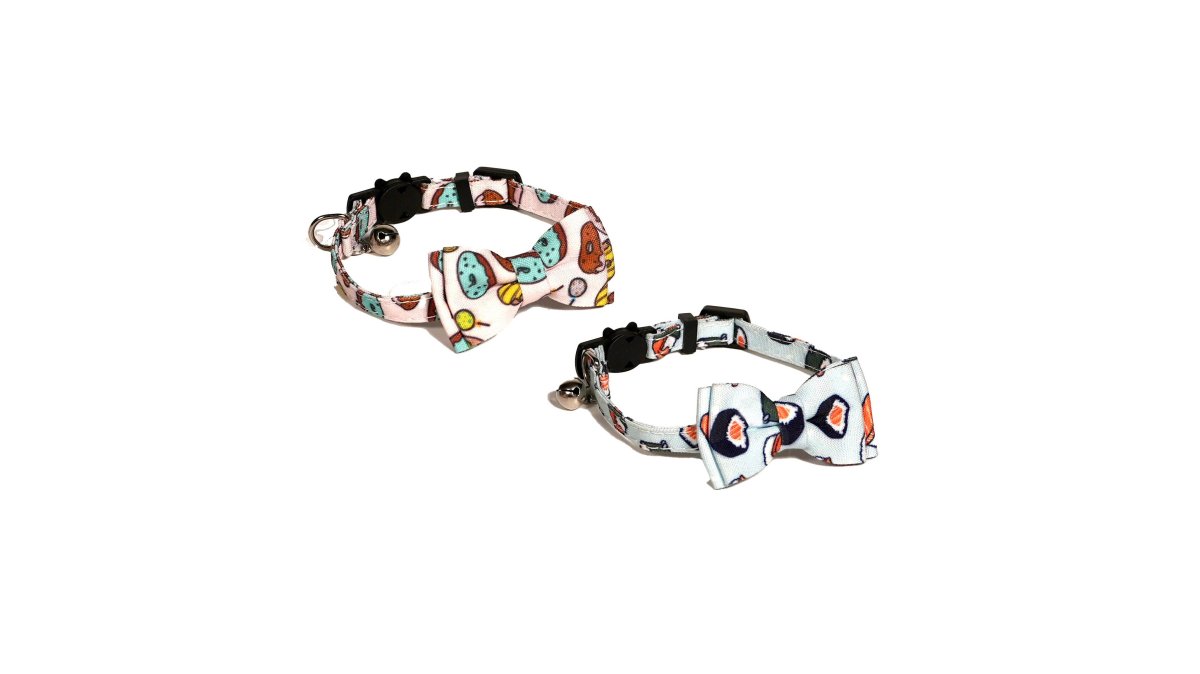
The fastest way to make a cat look photographed rather than snapped is a bowtie collar, and our 2 Pack Cat Collar with Bowtie in Sushi and Donut Print at $8.99 is built for exactly this.

The quick release clasp matters more than the print: it comes off in a second if your cat objects, the single most important feature on any wearable accessory for cats.
How to Style a Bowtie Collar for Close-Ups
Line the bowtie up with the jawline, not the throat. Sitting low it reads as a necklace; sitting high, just under the chin, it frames the face and draws the eye to the eyes.
For a two-pack like ours, shoot the sushi print against a warm backdrop and the donut print against something cool to keep a multi-photo post from looking repetitive.
2. Catnip Fish Toys: Interactive Props That Keep Cats Engaged
The hardest part of any cat photoshoot is getting a cat to stay. A catnip toy solves the engagement problem and doubles as a prop. Our Cat Bonnet Catnip Fish Toys, a 3-pack of Koi, Goldfish, and Sardine shapes at $9.99, gives you three silhouettes.
Each fish runs about 8 inches, long enough to read clearly in frame without crowding your cat's face. The catnip filling gives your cat a reason to look up, reach, and hold a pose.
Keep one fish in the frame and one just out of it: the visible fish anchors the composition, the hidden one pulls your cat's gaze toward the lens.
3. Cat Costumes for Photos: T-Shirts and Wearable Designs
Cat costumes for photos work best when they're soft, familiar, and easy to remove, so we lean toward apparel your cat barely notices. Our graphic tees, like the Cowboy Cat T-Shirt at $34.99, are everyday wear for the humans in the shot, a natural match for a coordinated portrait with your cat.

The heavyweight 6.1 oz cotton and garment-dyed finish photograph warmly rather than flatly, and the line-drawn illustrations hold detail in close-ups.
Matching Shirt Graphics to Your Cat's Coat
A black cat disappears against a dark tee. A cream cat vanishes against white. Match the graphic to the coat, not the other way around.
- Black or tuxedo cat: pick a faded or muted shirt color so the cat reads as the contrast
- Orange or ginger cat: warm earth tones in the shirt keep the palette from clashing
- Gray or tabby cat: soft blues and greens separate the cat from the fabric
- White cat: mid-tone shirts give the fur a clean edge
4. Safe Accessories for Cats: Fit, Comfort, and Camera-Ready Checks
Safe accessories for cats come down to three checks: fit, comfort, and how the piece behaves on camera.
Fit check. Two fingers should slide under any collar; if they can't, it's too tight, and if it slides off over the head, it's too loose.
Comfort check. Watch your cat for 60 seconds after putting anything on.
Camera check. Look at the accessory through your phone screen, not with your eyes. Small patterns blur, shiny clasps catch glare, and bells create motion blur in low light.
| Check | What to Test | If It Fails |
|---|---|---|
| Fit | Two fingers under the collar | Size up or remove |
| Comfort | 60-second behavior watch | Take it off, try later |
| Camera | View through your phone screen | Change angle or lighting |
| Safety release | Quick release clasp opens easily | Do not use for photos |
A bell passes two checks and fails the third: fine for daily wear, but it moves in every frame. For stills, remove the bell and keep the collar.
Reading Your Cat's Stress Signals During a Session
Consent during a photoshoot is the difference between a cat that tolerates a second session and one that hides under the bed next time the camera comes out. Learn the early signals and stop at the first one.
- Ears rotating back or flattening, the earliest sign of annoyance, usually before any sound
- Tail tip twitching or thumping, a cat that is building toward a swat
- Pupils dilated in steady light, arousal or fear, not curiosity
- Skin rippling along the back, a low threshold that means the session is over
- Turning the head away or backing up, a clear "no" that deserves respect
If you see any of these, remove the accessory, set the camera down, and give your cat a few minutes of normal interaction with no props. A session that ends on your cat's terms is one you can repeat tomorrow.
Materials and Supervision
Fabric choice matters for more than looks. Loose threads, dangling beads, and small glued-on decorations are choking or ingestion risks if your cat decides the accessory is a toy, so check every piece for anything a claw could catch or a mouth could pull free.
Supervise every second a wearable accessory is on your cat, and never leave a dressed cat alone, not even for a minute to grab a different lens.
2 Pack Cat Collar with Bowtie - Sushi and Donut Print →
Keep sessions to 10 or 15 minutes for wearables and treat every accessory as temporary, not a new outfit. The best photoshoot accessory is the one your cat forgets they're wearing, so take it off the moment the shot is in the can.
5. DIY Cat Photo Backdrop Ideas That Frame Your Accessories
A DIY cat photo backdrop is any homemade surface or setting that gives your accessories a clean stage. You don't need a studio, you need contrast and soft light.
The blanket setup. Drape a textured throw over a chair back and let it fall to the floor, then seat your cat at the base.
The window seat. Natural light from one side is the easiest lighting you'll ever get.
The paper sweep. Tape a large sheet of kraft paper to a wall and curve it onto the floor. No seam, no distraction, and the neutral tone makes any print pop.
The seasonal crate. Line a shallow box with fabric and set your cat inside. The frame edges do the cropping for you.
Lighting and Framing for Accessory Detail
The accessory is the subject, so light it like one. A single window on one side gives shape and shadow; a second light source flattens the image and kills the texture in a bowtie or a knit.
Shoot at your cat's eye level, kneel, sit on the floor, or set the camera on a stack of books. Shooting down flattens a bowtie into a blob and shortens the neck; shooting up makes the cat look larger than life but distorts a collar's proportions.
Frame tight for accessory shots and wide for context shots. A close crop on the bowtie and jawline sells the accessory; a wider frame including the backdrop sells the mood. Take both in the same session while your cat is still cooperative.
Introducing Props Without Losing the Pose
Introduce one new element at a time. Add the accessory, let your cat settle, take the portrait, then bring in the interactive prop for the action shots.
Keep a favorite toy just out of frame and use it to pull your cat's gaze toward the lens. A crinkle sound or soft call works better than a loud noise, which startles the cat into a wide-eyed, tense expression that reads as fear rather than curiosity.
Reusing and Storing Your Setups
The best DIY backdrops are the ones you can rebuild in two minutes. Roll the paper sweep around its cardboard tube and store it upright so it doesn't crease, and keep the folded throw in a dedicated bin with your other props.
6. How to Choose Cat Accessories for Photoshoots on Any Budget
Budget shapes the decision more than most guides admit. Under $10 gets you a bowtie collar set or a catnip toy pack, and either carries a whole session. Between $10 and $35 opens up apparel for the humans in the frame; above that, you're usually paying for variety rather than better photos.
Start with one wearable and one interactive piece. That pairing covers the two shot types that matter most: the posed portrait and the candid action frame.
- Under $10: bowtie collar two-pack ($8.99), catnip fish toy 3-pack ($9.99)
- Around $34: graphic tees for coordinated human-and-cat portraits
- Reusable over disposable: pieces you can use again beat one-time props
- Match to coat and setting: the right color beats the pricier item every time
The Cat Bonnet Catnip Fish Toys and the Tokyo Shibuya Cat Cafe T-Shirt at $34.99 both pull double duty: the toys get reused every play session, and the shirts work as everyday wear long after the photos are posted.
Conclusion: Styling Your Cat for the Perfect Shot
The gap between a forgettable cat photo and one people stop scrolling for usually comes down to one accessory and five extra minutes of patience. Start with a piece your cat will tolerate, check the fit and camera angle before you shoot, and keep the session short.
At Cat Bonnet, we build the pieces that make those five minutes easier: removable bowtie collars with quick release clasps, catnip fish toys sized for the frame, and garment-dyed graphic tees that photograph as well as they wear. Get started with Cat Bonnet and turn your next cat photoshoot into the shot you actually wanted.
Frequently Asked Questions
What accessories make cat photoshoots more interesting?
Bowtie collars, catnip fish toys, and graphic t-shirts add personality and interactivity. A removable bowtie collar ($8.99) gives a polished look, while catnip toys keep cats engaged and moving. For a cohesive theme, match accessories to your cat's coat color or your backdrop. Safe accessories for cats, like quick-release collars, ensure comfort during the shoot.
What props are safe to use in a cat photoshoot?
Choose props that are lightweight, non-toxic, and free of small parts that can be chewed off. Catnip fish toys (3-pack, $9.99) are safe and encourage natural play. Avoid strings, ribbons, or anything a cat can swallow. Always supervise your cat and remove props if they seem stressed. Quick-release collars are a safe choice for wearables.
How do I make a DIY backdrop for cat photos?
Use a blanket or fabric in a color that contrasts with your cat's fur. Hang it over a chair or tape it to a wall, ensuring it's taut and wrinkle-free. Natural light works best, so place the backdrop near a window. Add a few cat photoshoot props, like a bowtie collar or fish toy, to complete the scene. Keep the setup simple to avoid overwhelming your cat.
How do I keep my cat comfortable during a photoshoot?
Start with short sessions (5-10 minutes) and take breaks. Use treats and praise to create positive associations. Ensure accessories like collars fit snugly but not tight, and are made from soft materials. If your cat shows signs of stress, such as flattened ears or tail twitching, stop and try again later. Comfort is key to natural, adorable photos.