

Table of Contents
- Why Artisan Cat Products Are Worth the Investment
- How to Spot Genuinely Handmade Cat Toys
- Eco-Friendly Cat Products: Materials That Matter
- Unique Cat Accessories That Reflect Your Style
- Cat-Themed Gifts for Cat Lovers: What to Look For
- Evaluating Craftsmanship and Durability in Artisan Cat Products
- Price, Value, and Total Cost of Ownership
- Conclusion: Making the Switch to Artisan
- Frequently Asked Questions
Last Updated: October 14, 2026
Why Artisan Cat Products Are Worth the Investment
If you have ever watched a mass-produced cat toy lose a seam within a week, you already understand why choose artisan cat pet products close that gap. This guide from Cat Bonnet explains why choose artisan cat pet products: they tend to last longer, use safer materials, and support makers who can actually tell you where their supplies came from. Small-batch production costs more up front, but it usually costs less over the life of the product.
The Difference Between Handmade and Mass-Produced
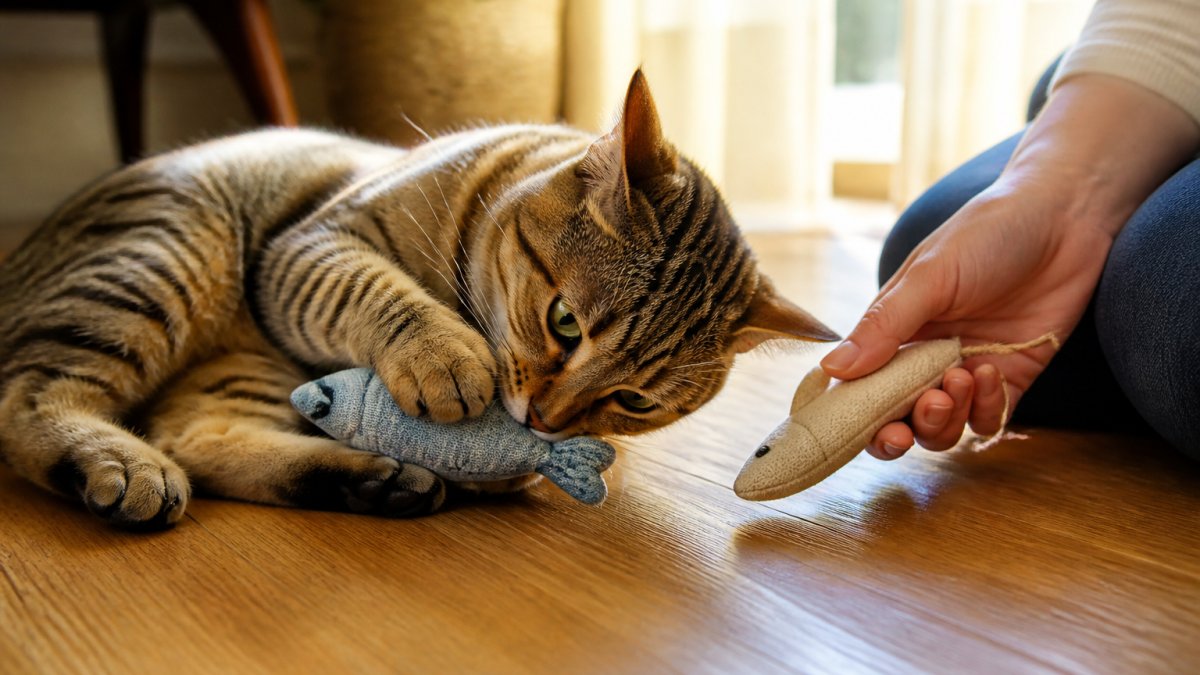
Handmade and mass-produced cat products differ mainly in how much attention each unit receives. In a small workshop, someone inspects the stitching, checks the catnip fill, and adjusts the pattern by hand. On a factory line, speed sets the standard.
That distinction shows up in three practical ways:
- Replacement frequency. A toy that holds its shape for years beats one you reorder every season.
- Material traceability. Artisan makers usually know their suppliers by name.
- Repairability. Many handmade pieces can be re-stitched rather than thrown out.
How to Spot Genuinely Handmade Cat Toys
"Handmade" and "artisan" get used loosely in pet retail, so it helps to separate a genuine small-batch maker from a reseller who applies the label to factory goods. The clearest signal is not a single feature but a pattern of evidence across the listing, the maker's story, and the physical product.
What artisan production actually looks like
Most practitioners describe artisan production as a combination of four things, and a real maker can speak to all four:
- Small-batch methods. Items are cut, sewn, or assembled in limited runs rather than by the thousand. A maker can usually tell you roughly how many units a batch contains.
- Maker involvement. The person named on the shop page is involved in production, not just in marketing. Look for process photos, workbench shots, or a stated role.
- Transparent sourcing. The listing names the mill, farm, or supplier for at least the primary material, the wool, the cotton, the catnip, rather than saying "premium materials."
- Traceable production scale. The maker can describe where the item is made (a home studio, a small workshop) and roughly how long one unit takes.
A practical evaluation checklist
Use this before you buy:
- Stitching is tight and even, with no loose thread ends
- Seams are reinforced at stress points like tails, fins, and collar attachment points
- Filling feels evenly distributed, not lumpy or hollow
- The maker lists specific materials and their origins, not vague categories
- Photos show the actual product and, ideally, the workspace, not a generic stock image
- The listing explains care and cleaning
- The shop states batch size, production time, or both
Questions that separate makers from resellers
A short email or message will usually settle it. Ask where the catnip is grown, who sews the item, and how many are made at once. A genuine artisan answers in specifics. A reseller deflects, repeats marketing language, or points you to a wholesale catalog.
Where handmade and mass-produced genuinely diverge
Handmade and mass-produced cat products differ mainly in how much attention each unit receives. In a small workshop, someone inspects the stitching, checks the catnip fill, and adjusts the pattern by hand. On a factory line, speed sets the standard. That distinction shows up in three practical ways:
- Replacement frequency. A toy that holds its shape for years beats one you reorder every season.
- Material traceability. Artisan makers usually know their suppliers by name.
- Repairability. Many handmade pieces can be re-stitched rather than thrown out.
None of this means every handmade item is automatically better. Small-batch production has real trade-offs: longer lead times, limited colorways, and higher upfront prices. The value case rests on durability and sourcing, not on the label alone.
Eco-Friendly Cat Products: Materials That Matter
Eco-friendly cat products are items made from renewable, recycled, or low-impact materials and produced in ways that reduce waste. For cats specifically, that often means organic catnip, natural fibers, and vegan felt instead of synthetic blends.
Materials to look for:
| Material | Why It Helps | Best For |
|---|---|---|
| Organic catnip | Grown without synthetic pesticides | Interactive toys |
| Natural wool felt | Renewable and biodegradable | Beds and caves |
| Recycled fiber fill | Diverts waste from landfill | Stuffing and cushions |
| Untreated wood | No chemical finishes near claws | Scratchers and furniture |
Durability and environmental impact are linked. A scratcher that survives three years replaces three cheap ones, which means less packaging, less shipping, and less waste. Resource conservation starts with buying fewer, better things.
Unique Cat Accessories That Reflect Your Style
Unique cat accessories let you express taste rather than settle for generic pet-store inventory. That can mean a collar with a removable bowtie, a print inspired by historical cat art, or a design drawn from Japanese aesthetics. The point is that the object says something about you, not just about your cat.
Our 2 Pack Cat Collar with Bowtie in Sushi and Donut Print is a good example. Each collar has a quick release clasp for safety, a bell, and a pet tag loop, and the bowtie comes off when you want a simpler look. Two prints in one pack means you can rotate them.

Functionality still comes first. A collar has to fit correctly and release under pressure. Style is what you add once the basics are right.
Cat-Themed Gifts for Cat Lovers: What to Look For
Cat-themed gifts for cat lovers work best when they suit the recipient's actual cat, not just the recipient's taste. A beautiful bed is useless if the cat refuses anything enclosed. A toy is wasted if the household already has a dozen.
Match the gift to the cat:
- Kittens and high-energy adults: interactive toys, wand attachments, catnip fish
- Senior cats: low-sided beds, easy-reach bowls, softer textures
- Shy cats: covered caves and quiet resting spots
- Grooming-averse cats: gentle brushes and quiet clippers
Age and mobility change what a cat can use comfortably. Breed-specific needs matter too, though most cats care far more about shape and height than pedigree.
Cat Bonnet Catnip Fish Toys. 3-pack with Koi, Goldfish, and Sardine Shapes. →

Evaluating Craftsmanship and Durability in Artisan Cat Products
Craftsmanship is easiest to judge at the seams and joints, because that is where cheap goods fail first. Run a thumb along a stitched edge.
A short evaluation routine
- Inspect the seams. Reinforced, tight stitching lasts. Single-line stitching does not. Look for backstitching or bar tacks at stress points.
- Check the hardware. Collar clasps should release cleanly and feel solid. Cheap plastic buckles crack; metal or reinforced nylon holds.
- Weigh the filling. Evenly packed toys keep their shape; underfilled ones flatten within weeks.
- Read the care instructions. Washable items get used more, and a maker who documents care is usually a maker who tested the product.
- Look for a repair path. Can a loose seam be fixed, or is the item disposable? A maker who offers replacement parts or repair guidance is signaling that the product is meant to last.
What durability actually looks like over time
Durability is not only about materials. It is about whether the maker designed for a cat's actual behavior, biting, bunny-kicking, dragging toys across the floor, and kneading beds into submission.
A common pattern among cat owners is that well-made items fall into three lifespan bands:
- Interactive toys and small accessories: months to a couple of years, depending on how aggressively the cat plays.
- Beds, caves, and scratchers: several years if the frame and filling hold up.
- Collars and everyday hardware: often the longest-lived, since the failure point is the clasp, not the fabric.
These are patterns, not guarantees. Your cat's play style is the biggest variable.
Artisan versus mass-produced: a fair comparison
| Factor | Artisan / small-batch | Mass-produced |
|---|---|---|
| Upfront price | Higher | Lower |
| Availability | Limited runs, longer lead times | Immediate, wide selection |
| Customization | Rare | |
| Environmental impact | Lower volume, often repairable | Higher volume, often disposable |
| Replacement frequency | Lower | Higher |
| Repairability | Uncommon |
Price, value, and total cost of ownership
Total cost of ownership, not sticker price, is the honest way to compare. A cheap toy replaced four times a year costs more than one well-made toy bought once.
Value also includes the things you cannot easily price:
- Fewer returns and fewer disappointments
- Less packaging and waste
- Products you are happy to photograph and share
Ethical sourcing and maker transparency belong in this calculation too. Knowing who made an item and how they were paid is part of what you are buying.
Price, Value, and Total Cost of Ownership
Total cost of ownership, not sticker price, is the honest way to compare artisan and mass-produced cat products. A cheap toy replaced four times a year costs more than one well-made toy bought once.
Think in terms of cost per year of use. If a handmade toy lasts three years and a budget alternative lasts three months, the handmade option wins even at several times the price. The same math applies to scratchers, beds, and collars.
Value also includes the things you cannot easily price:
- Fewer returns and fewer disappointments
- Less packaging and waste
- Products you are happy to photograph and share
Ethical sourcing and maker transparency belong in this calculation too. Knowing who made an item and how they were paid is part of what you are buying.
Conclusion: Making the Switch to Artisan
Switching to artisan cat products is less about spending more and more about buying differently. Start with one item you replace often, such as a toy or a collar, and see how it holds up. If it lasts, you have your answer.
At Cat Bonnet, we curate cat-themed apparel and pet accessories with an eye on design and quality, from Japanese-inspired prints to everyday essentials. Our Catnip Fish Toys 3-pack pairs premium catnip with durable stitching, and our bowtie collars combine safety hardware with prints you will actually want in photos. Browse the collection and find pieces that celebrate your cat and your taste at the same time.
Frequently Asked Questions
What makes a cat product genuinely artisan-made?
Artisan cat products are made in small batches by individual makers or small teams, often using traditional techniques. Look for details like hand-stitched seams, natural materials, and slight variations between items. Makers who share their process, source materials locally, and produce in limited quantities are usually the real deal. Mass-produced items, by contrast, are identical and made in large factories.
Are handmade cat toys safe for my cat?
Handmade cat toys can be very safe when made with pet-safe materials and sturdy construction. Check for securely attached parts like bells or eyes, and avoid toys with loose strings or small pieces that could come off. Cat Bonnet's Catnip Fish Toys, for example, are about 8 inches long and infused with premium catnip, with no small detachable parts. Always supervise play and inspect toys regularly for wear.
Are eco-friendly cat products worth the extra cost?
Eco-friendly cat products often cost more upfront because they use natural or recycled materials and small-batch production. But they tend to last longer and reduce replacement frequency. For example, a well-made collar with a quick-release clasp can outlast several cheap ones. Over time, the total cost of ownership may be similar or lower, and you avoid contributing to waste.
How do I choose a durable collar or toy for my cat?
Look for reinforced stitching, metal hardware, and materials like sturdy nylon or natural fibers. For collars, a quick-release clasp is essential for safety. For toys, check that embellishments are securely sewn on. Cat Bonnet's 2 Pack Cat Collar with Bowtie includes a removable bowtie, bell, and pet tag loop, all on a quick-release collar. Read customer reviews and ask makers about their quality control.